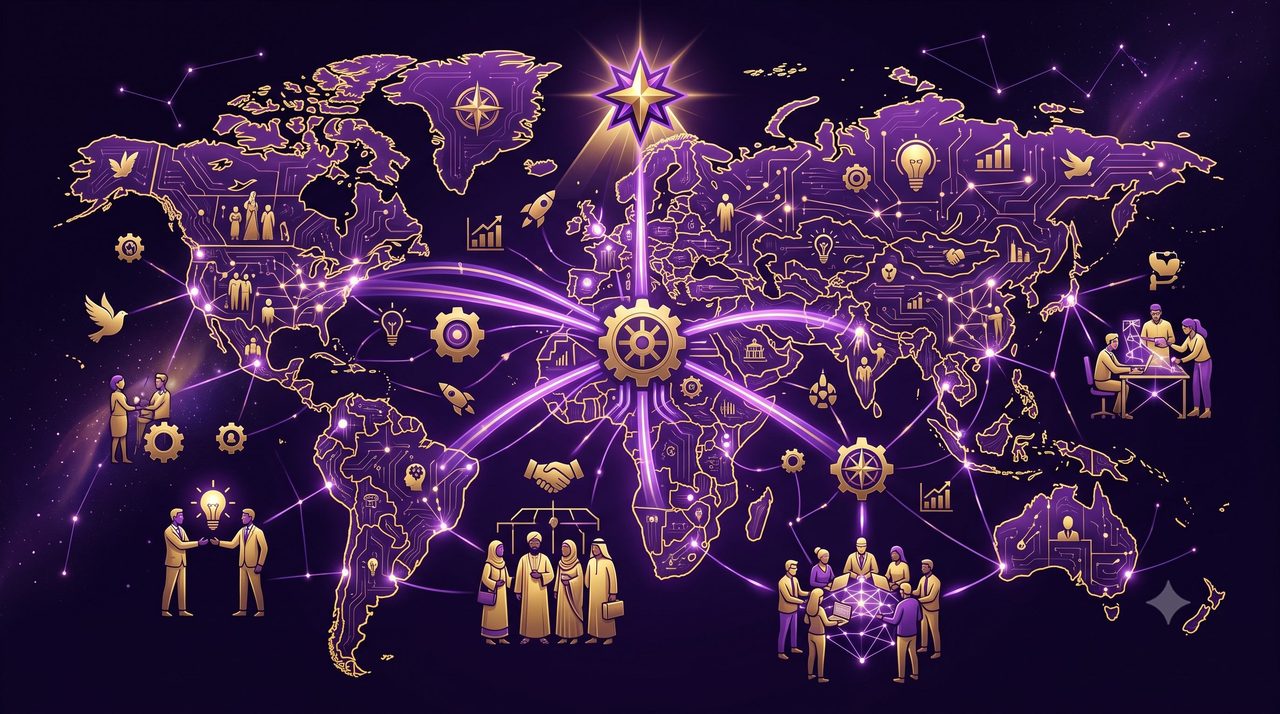
At the highest levels of leadership, the role expands significantly, becoming less about managing tasks and more about guiding institutions, shaping long-term direction, and building sustainable systems. Leaders at this level must think beyond short-term achievements and focus on long-term institutional health and societal impact. This module explores Vision Casting & Organisational Strategy, and Crisis Leadership & Cultural Intelligence.
Module Video Lesson
Video Coming Soon
Upload your S402 video to YouTube and paste the link here
Module Video Lesson
Audio Lesson, Listen On the Go
Conversational audio overview, perfect for listening while on the go
Audio file placeholder, upload MP3 to replace this
Visual Reference Images
Tap any image to view full screen
1
Vision Casting & Organisational Strategy
Vision casting is the process of clearly communicating a desired future that inspires people to work toward a shared goal. A strong vision answers three fundamental questions: Where are we going? Why does it matter? How will we get there? A vision must be both inspiring and realistic, if too vague it fails to motivate; if unrealistic it loses credibility.
Organisational strategy converts vision into practical systems, measurable goals, and coordinated actions. Strategic leadership requires attention to resource allocation, workforce development, operational systems, performance evaluation, and long-term sustainability. Successful organisations rarely depend on improvisation, they operate through carefully designed systems that ensure consistency and accountability.
High-level leaders also understand that no individual leads forever. Succession planning, mentoring emerging leaders, creating training programs, distributing decision-making authority, and documenting institutional knowledge, ensures organisations remain strong even when leadership transitions occur.
Function of Vision
Explanation
Direction
Clarifies long-term goals and destination
Motivation
Inspires people to contribute their best
Alignment
Ensures teams work toward the same objective
Decision Guide
Helps leaders evaluate strategic choices
📖Case Study
Jeff Bezos, Visionary Business Leadership at Amazon
When Bezos founded Amazon in 1994, the company began as an online bookstore. However, Bezos envisioned something far larger: a digital marketplace capable of selling almost any product. This long-term vision guided Amazon's strategy for decades, investing heavily in logistics systems, data technology, and cloud computing infrastructure. One major strategic innovation was Amazon Web Services, which became one of the world's largest cloud computing services. Bezos's leadership demonstrates how a clear vision combined with disciplined strategy can transform a small startup into a global institution.
📖Case Study
Lee Kuan Yew, National Transformation Through Vision
When Singapore gained independence in 1965, the country faced major economic and social challenges. Lee Kuan Yew articulated a clear vision: transforming Singapore into a stable, prosperous, and globally competitive nation. His administration implemented strategic reforms in education, governance, housing, and economic policy, emphasizing anti-corruption policies, merit-based leadership, strong infrastructure, and international trade partnerships. Within a few decades, Singapore became one of the world's most advanced economies. This illustrates how vision casting combined with long-term strategic planning can reshape entire nations.
✍️Personal Activity
Draft a vision and strategy outline for a community initiative or organisation you care about, including mission statement, long-term goals, strategic priorities, and potential challenges.
👥Group Activity
Create a mock organisational structure for a project team, assigning roles such as executive leader, operations manager, finance coordinator, and communications officer. Discuss how each role contributes to the mission.
💭 Reflection Question
When facing crisis or uncertainty, do I respond with panic or with thoughtful composure?
2
Crisis Leadership & Cultural Intelligence
A crisis threatens the stability, reputation, or survival of an organisation or community. During such moments, leadership is tested more intensely than during periods of stability. Crisis leadership requires calm decision-making, rapid information analysis, and clear communication. Effective crisis response: gather information → consult experts → make decision → communicate clearly → implement → recover.
Cultural intelligence refers to the ability to understand and interact effectively with people from different cultural backgrounds. In today's interconnected world, leaders who lack cultural awareness may unintentionally create misunderstandings or conflicts. Cultural intelligence includes: respect for cultural diversity, awareness of different communication styles, sensitivity to cultural values, and adaptability in leadership approach.
While crises present serious challenges, they can also reveal hidden weaknesses. Effective leaders view crises as opportunities to strengthen systems, improve communication processes, refine strategic planning, and develop stronger teams. By learning from difficult experiences, organisations often emerge stronger and more resilient.
📖Case Study
Jacinda Ardern, Crisis Leadership in Public Health
Ardern's leadership during the COVID-19 pandemic received international attention for her clear communication style and decisive actions. Her government implemented early containment measures and communicated frequently with citizens to explain policies and address concerns. Ardern emphasized transparency and empathy, reassuring the public while maintaining firm leadership decisions. This example demonstrates how calm communication and ethical clarity can guide societies through uncertain situations.
📖Case Study
Howard Schultz, Cultural Intelligence at Starbucks
As leader of Starbucks, Schultz expanded the company into dozens of countries with widely different cultural traditions. Rather than imposing identical store experiences everywhere, Starbucks adapted aspects of its design and menu to local cultures, incorporating local architectural styles and food options while maintaining the company's core brand identity. This approach allowed Starbucks to build strong global relationships while respecting local traditions.
📖Case Study
Elon Musk, Innovation Through Crisis at Tesla
During Tesla's early years, the company faced severe financial difficulties that nearly forced it into bankruptcy. Musk responded by restructuring operations, securing new investment, and accelerating product development. Although the crisis threatened the company's survival, it ultimately strengthened Tesla's strategic focus on electric vehicle innovation. Today Tesla remains one of the most influential companies in the global automotive industry, demonstrating that crises can become catalysts for breakthrough progress.
✍️Personal Activity
Draft a vision and strategy outline for a community initiative or organisation you care about, including mission statement, long-term goals, strategic priorities, and potential challenges.
👥Group Activity
Create a mock organisational structure for a project team with clearly assigned roles. Discuss how delegation and collaboration affect organisational performance.
💭 Reflection Question
When facing crisis or uncertainty, do I respond with panic or with thoughtful composure?
✓ Conclusion
Organisational and high-level leadership requires far more than personal competence. It demands the ability to define vision, develop strategy, manage institutions, and guide communities through complex challenges.
Vision casting inspires direction, while organisational strategy transforms ideas into sustainable systems. Crisis leadership tests the maturity and resilience of leaders, and cultural intelligence enables collaboration within diverse environments.
The experiences of Jeff Bezos, Lee Kuan Yew, Jacinda Ardern, Howard Schultz, and Elon Musk demonstrate how these principles operate in real-world leadership. Sustainable influence depends on vision, preparation, ethical responsibility, and the ability to guide people through both opportunity and crisis.
Your reading progress
0% read
Module Progress
0%
S402 completed
Flashcards, tap to reveal
Question
What three questions must a strong organisational vision answer?
Tap to reveal answer
Answer
Where are we going? Why does it matter? How will we get there? A vision must be both inspiring and realistic to motivate people.
1 / 5
Quick Quiz
1. What is vision casting in organisational leadership?
2. What did Jacinda Ardern's pandemic leadership demonstrate?
3. How did Starbucks apply cultural intelligence in global expansion?